Farmer of the Year
2022
A Leader Among Peers: Iowa Farmer Kelly Garrett Celebrated for his Sustainability Leadership and Outstanding Conservation Efforts
Kelly Garrett - Garrett Land & Cattle (Arion, Iowa)
A Leader Among Peers: Iowa Farmer Kelly Garrett Celebrated for his Sustainability Leadership and Outstanding Conservation Efforts
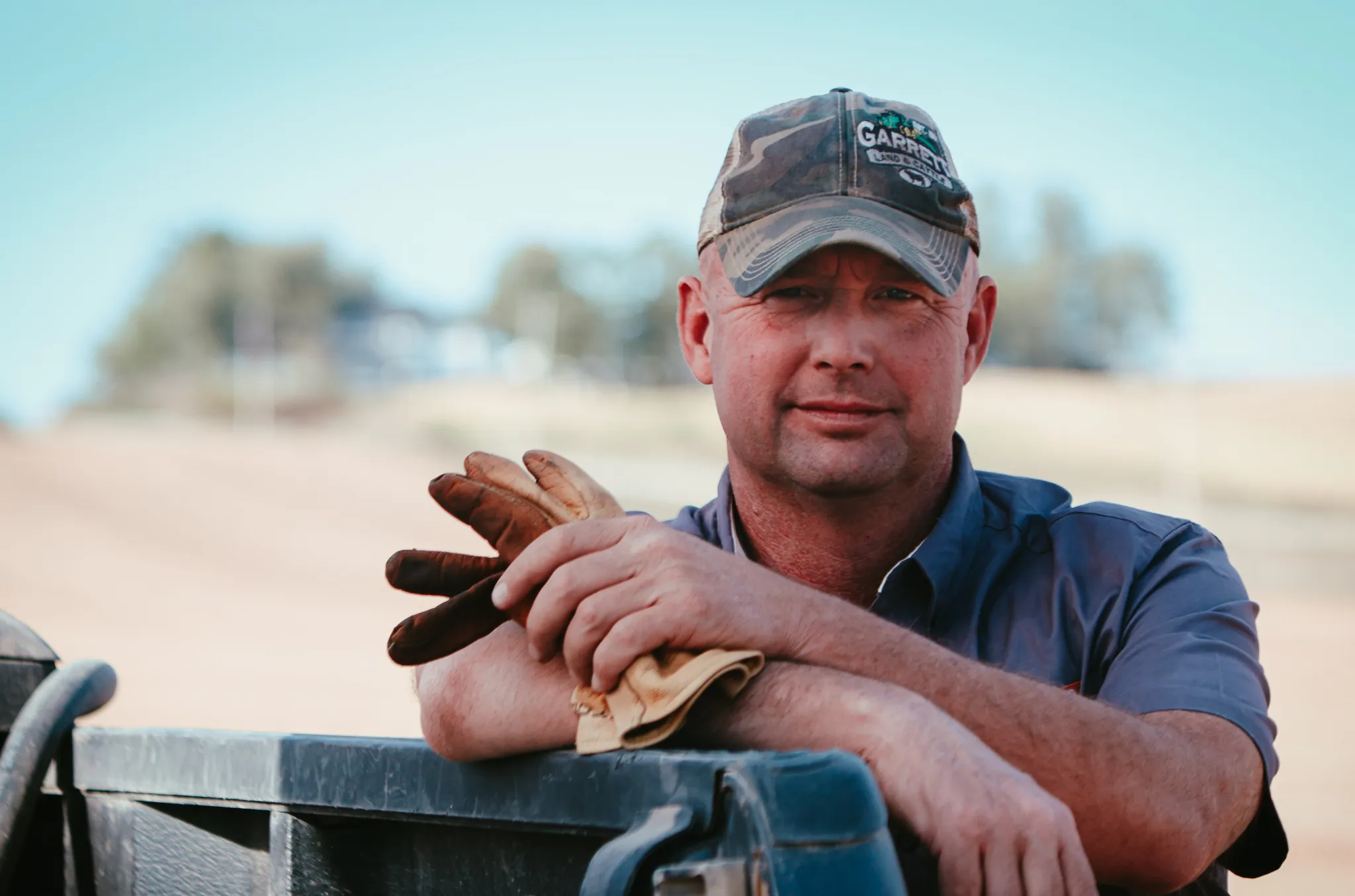
 "This is a family operation that goes back six generations. I'm the sixth and my sons are the seventh," explains Kelly Garrett. "The first generation came here in 1881."
A lot has changed since that first generation, including different weather patterns and new inputs and technology. But at its core, the family operation still runs the same way - striving to grow the best crops in a way that will keep the next generation farming.
"In a lot of ways, we are returning to the way that my grandfather or my great-grandfather would've farmed, but we're doing it with new technology and new metrics like the Field to Market Platform," remarks Garrett. "We're using new age technology with old fashion or old school ways of farming, and it's all coming together and it's improving."
Farming with Sustainable Agriculture at the Forefront
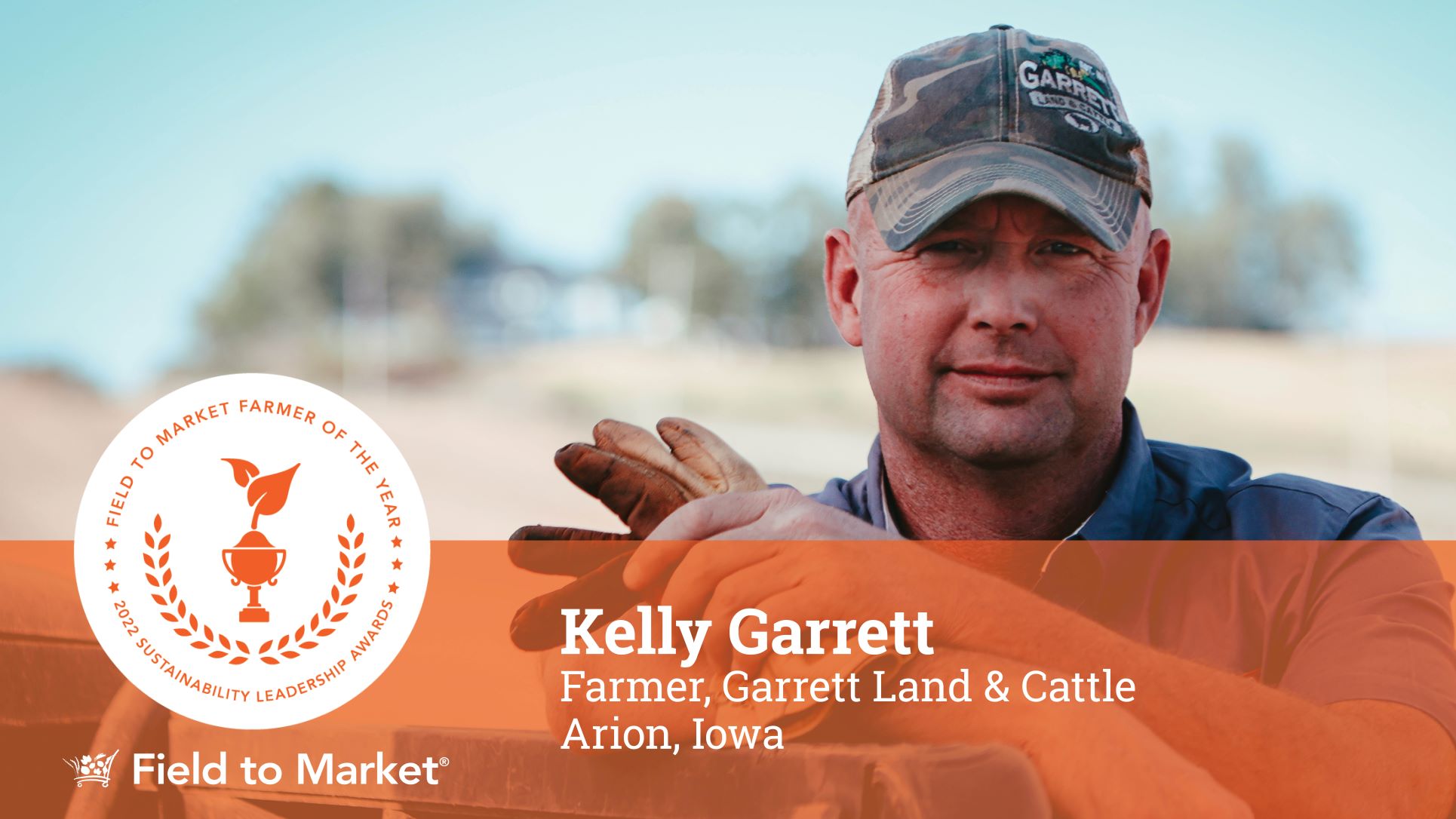
Recognized for outstanding conservation efforts on his farm and leadership in advancing sustainable agriculture, Garrett was honored as the 2022 Farmer of the Year at Field to Market's annual awards ceremony. Owning and operating Garrett Land & Cattle in Arion, Iowa, Garrett farms approximately 7,000 acres of corn and soybean and raises about 500 head of cattle in his cow-calf herd, all with a strong conservation mindset and a desire to help others do the same.
"I try to become more efficient, and I try to always do better on the acres that I have," he says. "The basis of our operation is to try to improve soil health because it improves our yields and improves the return on investment (ROI)."
Garrett includes a long list of sustainable practices on his operation - from no-till and cover crops to drip irrigation and variable rate applications of fertilizer. He even has a few acres of rye and oats so that they can grow their own cover crop seed.
"When we take the corn and soybeans out, we put cover crops in. We're going to pasture the cows on those cover crops or those corn stalks," Garrett explains. "Everything has a synergy, or an intentional congruence… everything ties back into one another."
Garrett has also replaced all synthetic fertilizer (outside of nitrogen) on his operation with a bi-product sourced from his local feed industry - an application he calls 'plant food.' The amount of waste Garrett removes from the liquid feed company to use as 'plant food' is equivalent to the amount of waste produced by a town of 200,000 people - that's about the size of Sioux Falls, South Dakota.
"There are so many byproducts in agriculture now… one man's trash is really another man's treasure," highlights Garrett. "It makes me feel good, too, because that's very sustainable, or even regenerative."
This upcycling system created with his local industry neighbors has reduced Garrett's synthetic nutrient use, greatly improved water quality both on- and off-farm, and has contributed to a zero runoff operation.
"There are many environmental benefits from the sustainable practices that we do, and it all relates back to carbon," he says. "The more carbon I put into the soil, the healthier my microbial system becomes, the more plant available nutrition I have, and the better my yields are." 
Finding New Pathways for Continuous Improvement
Often referred to as, "The Carbon Farmer," Garrett was one of the first farmers to sell his carbon credits in the U.S. about two years ago. But, according to Garrett, he didn't need to change his practices to get involved with carbon markets - he was already doing the practices that enabled him to get involved.
"I have not changed the way I farm to capture carbon market dollars," he explains. "I farm the way I farm because it's the best for ROI. The carbon markets, the cover crops, the no-till… I farm the way I farm because it is the best way to farm."
"Kelly was the first one to get on board [with carbon credits] and he's helped his neighbors become more comfortable with it because he's been through the learning process," remarks Mike Evans, an agronomist with Integrated Ag Solutions. "I'll ride in the truck with him when guys call him and I'll listen to their conversations, and he'll talk them through it all. He's really helped a lot of guys understand it more and be more comfortable with it."
Through his adviser Mike Busing at Windy Ridge Ag, Garrett is able to use the Truterra™ sustainability tool, which is fully integrated with the Fieldprint Platform™, to measure and track his conservation practices in ways he didn't before.
"The Truterra sustainability tool being integrated with the Fieldprint Platform brings us the data to make better, more secure decisions," Garrett says. "I can measure what's going on and if I can measure my ROI, then I will expand or pull back on the areas that I need to. It really is cutting edge technology and we're kind of building our own roadmap with it."
"Farmers are very competitive, and so when you look at that spider graph with the state benchmarks and national benchmarks, you can see where you're at as an individual grower. Since they're competitive, they want to be better than the state. They want to be better than the national. They all want to be better than their peers," mentions Busing. "So, it really helps kind of light a fire." Through the Platform, embedded within the Truterra sustainability tool, Garrett can test, implement and measure conservation management practices on a field-by-field basis, rejecting the one-size-fits-all approach and making sustainable practice decisions based on each field's needs.
"It really helps in working with Kelly because we can look at different things," says Busing. "We can say 'okay, here's our score now on this particular field,' and if we add cover crops, for example, we can simulate that score so we can say 'where does your score go if we do this?'" 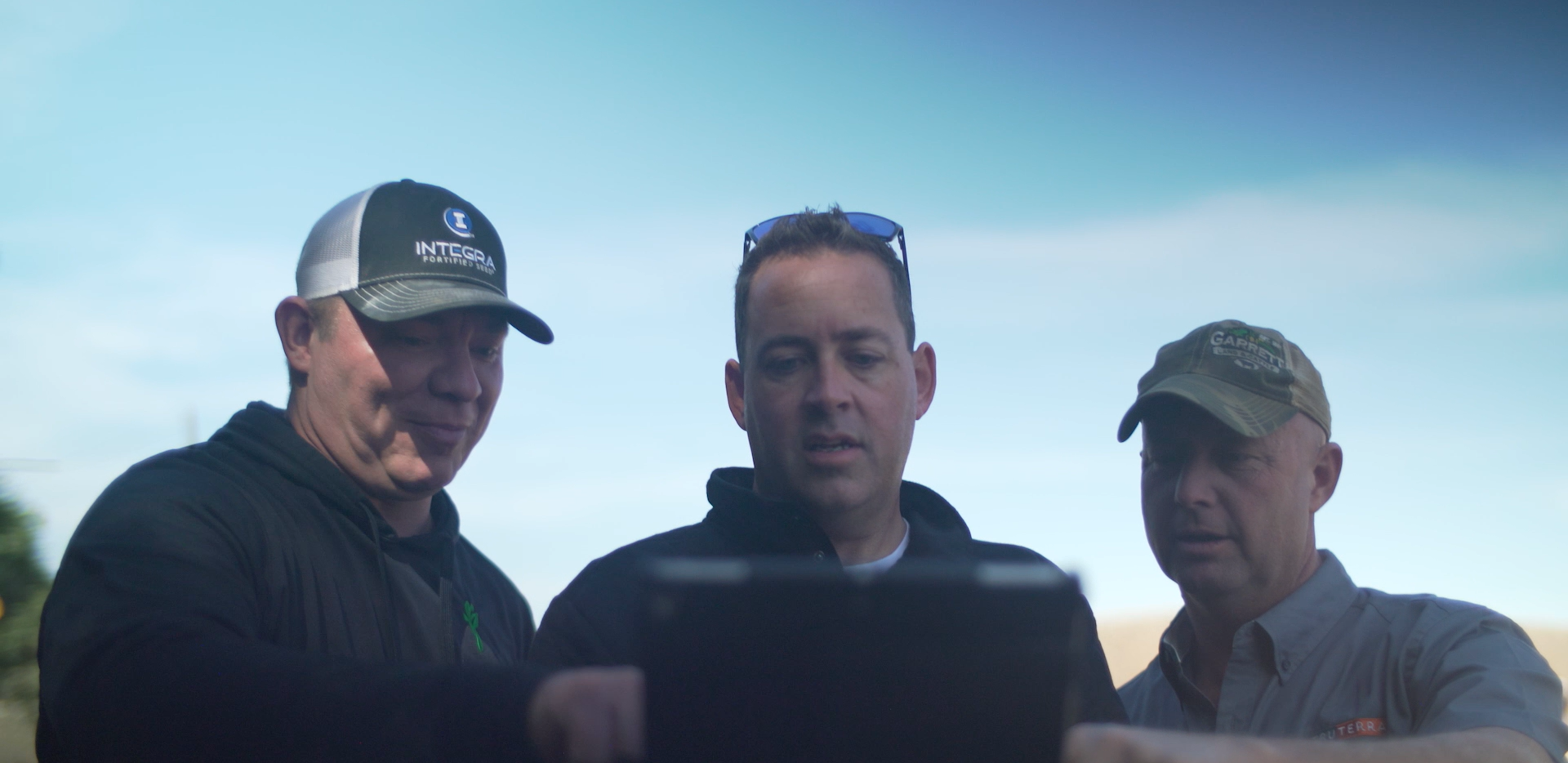 Garrett is also involved in a few Field to Market Continuous Improvement Accelerator™ projects that are harnessing the power of collaboration to implement locally-led conservation solutions.
One of those projects is the 'Sound Agriculture Nutrient Reduction Project,' which aims to help corn growers improve nutrient efficiency by reducing up to 50 pounds per acre of synthetic nitrogen in an effort to mitigate greenhouse gas emissions, improve water quality, and boost overall soil health across key food, feed and fuel supply sheds.
"Working with Kelly was a highlight for us this year, with his passion and willingness to engage in advanced farming practices," said Chad Scebold, Director of Sales & Strategic Accounts at Sound Agriculture. "Kelly is one of the most progressive growers we know, committed to identifying ways to maximize profitability and push boundaries, while remaining focused on continual improvement. His farming methods have the potential to result in big environmental improvements, and we are grateful to be working with him. We hope Kelly inspires others to take advantage of technologies that can help fully optimize nutrients and lessen the need for synthetic fertilizer."
"I try to become more efficient, and I try to always do better on the acres that I have."
Kelly Garrett
Farmer
Arion, Iowa 
A Leader Among his Peers
The Farmer of the Year Award celebrates Garrett's commitment to continuous improvement, not just for himself but for the peers he helps along the way.
"Truterra was excited to nominate Kelly for the Farmer of the Year award out of recognition of his deep commitment to sharing the benefits and learnings of his continuous improvement journey to drive greater efficiencies on farm and positively impact not only his bottom line, but the farm businesses of thousands of farmers across the U.S.," says Tom Ryan, President of Truterra. "Kelly eagerly takes every chance available to share his mistakes, successes and ideas with others in the agricultural community in the hopes of inspiring more farmers to join him in the adoption of more regenerative practices and to experience his same success."
Primarily through XtremeAg, a platform Garrett co-founded to connect with real farmers from all over the U.S. who are committed to making sustainability improvements, Garrett is often sharing with fellow farmers the benefits of the tools and practices he uses.
"XtremeAg is really a peer group with five partners. Myself, here in western Iowa, Lee Lubbers in South Dakota, Matt Miles in Arkansas, Chad Henderson in Alabama, and Kevin Matthews in North Carolina," Garrett explains. "We're in our third year now and it's exceeded our expectations probably five- or ten-fold."
XtremeAg successfully reaches thousands of farmers through their various platforms (video, podcasts, social media, news media and more) and has a large social following with almost 35,000 likes on Facebook.
"We just share our experiences on our farms in a very open way," he says. "These days, everybody's so private - they don't want to share because they think that they're going to share their secret sauce with you. The five of us really feel that there's enough to go around for everybody and we just want to be open and share and help others."
"It's really impressive the way that group of guys have taken the competition out of the farming industry," adds Busing. "He's kind of opened things back up and he's really doing great things." 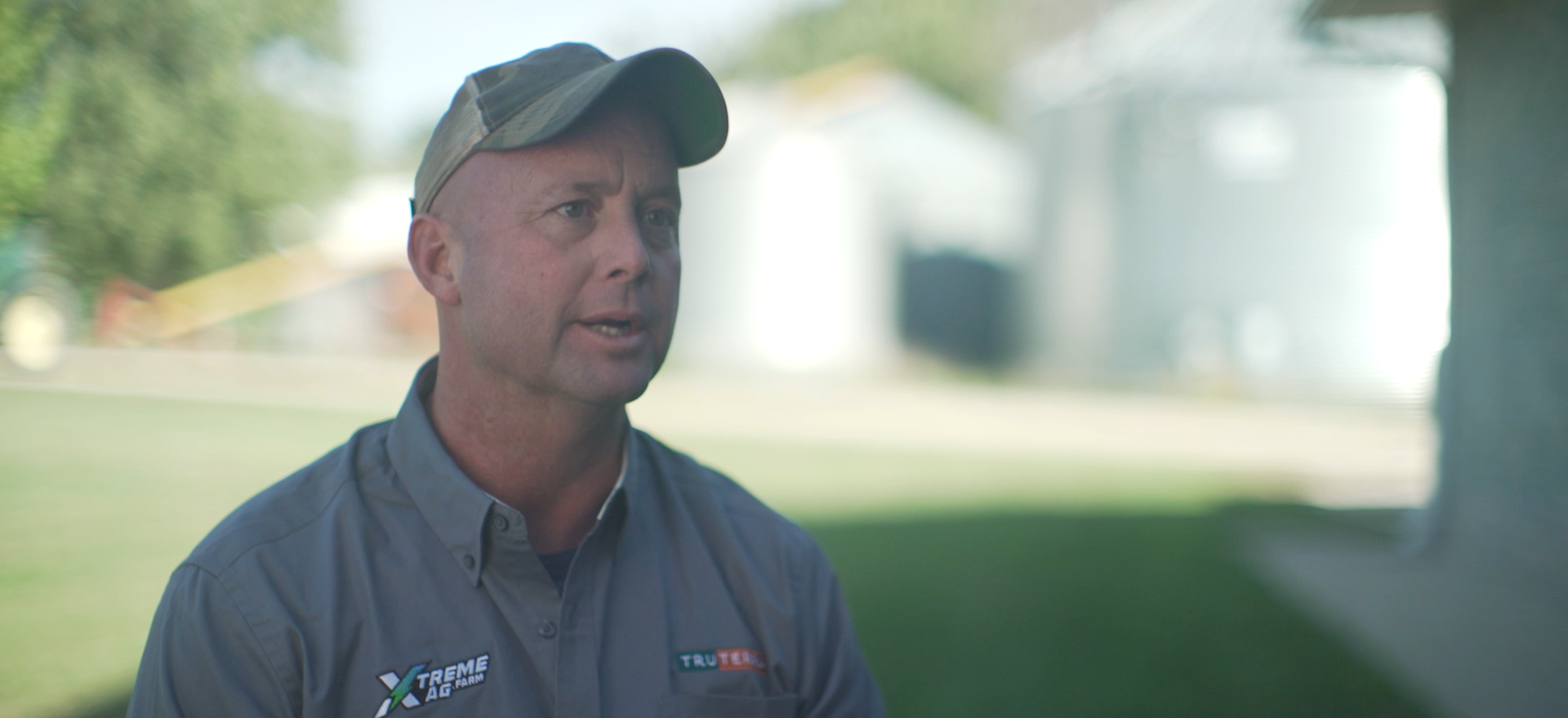
Looking to the Future
"Kelly's a visionary so he's always looking at how to improve," says Evans. "He's never satisfied with the status quo and it's a very driving force."
"His legacy, I think, would be that he's the guy that wants to be remembered for giving back to the land instead of taking from the land," adds Busing.
The sky is the limit for the future of Garrett Land & Cattle because, with Garrett at the helm, he's always pushing the envelope. Pushing further to progress towards his goals.
"The sustainability, the legacy and the ROI are really all tied together and it's all the same common goal," Garrett says. "That's something that's lost on the average person - all three of these things are pointing in the same direction, naturally. It really is the best way to go."
Keeping his operation moving into the future is extremely important for Garrett, wanting to leave the land better than how he had inherited it.
"My biggest, most important job is to build an operation that my three sons can come back to," says Garrett. "I hope my legacy is that people see, or my sons see, that I never stop trying to do better and that I feel that doing better is more profitable than trying to do more."